Megève
A farming village that learned to ski. Low chalets, a church square at the centre, and slopes that end in the village, not above it.
Destinations · Published November 2026 · Updated November 2026
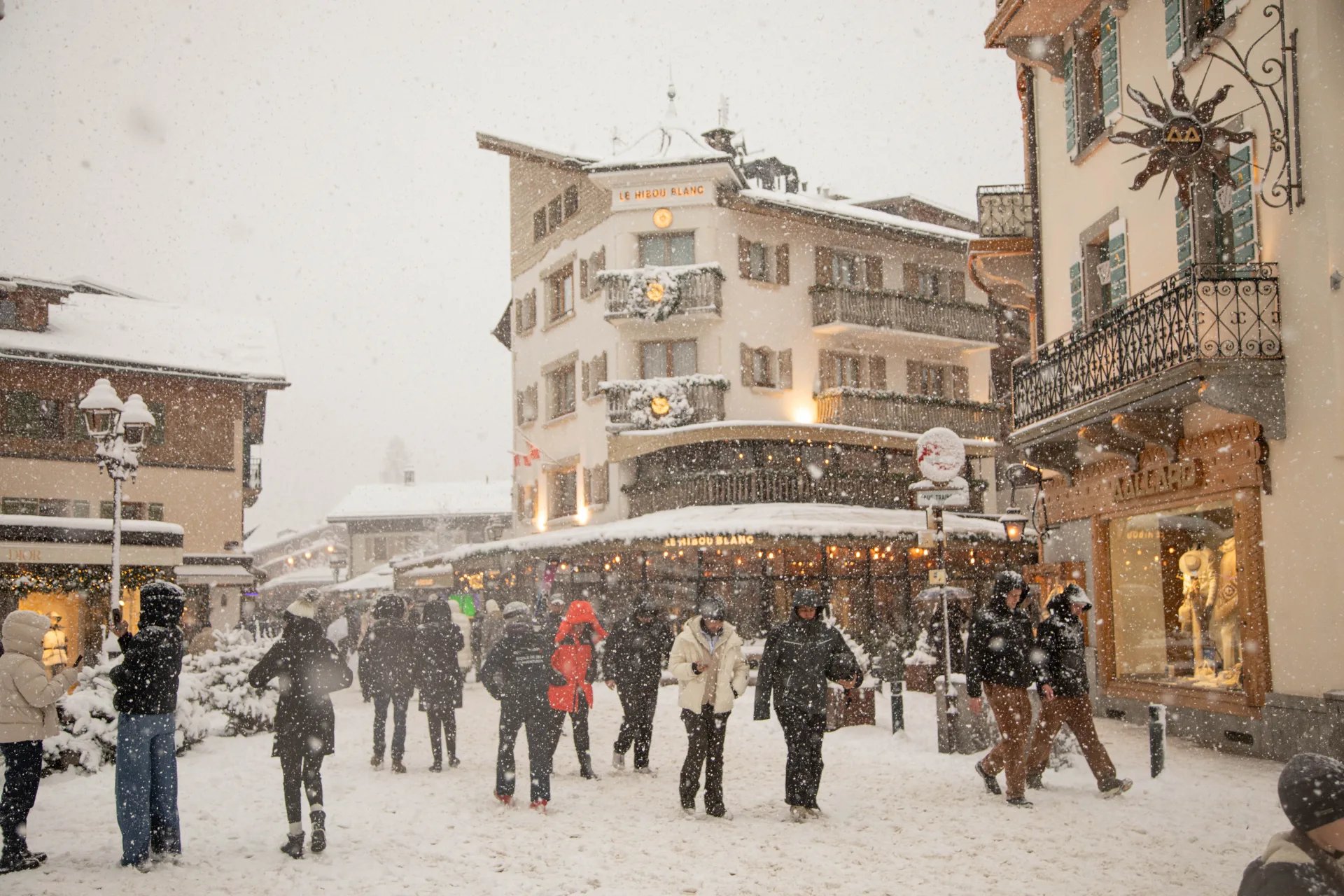
Photograph: Antonin Stephany, Megève Tourisme
Most ski resorts were built for skiing and acquired a village afterwards. Megève runs the other way. Megève Tourisme states the order plainly in its own heading: from farming village to ski resort. The village in Haute-Savoie comes first, with its cobbled streets, traditional chalets and lively squares, and the skiing was fitted around a place that already had a centre and a church.
That life was agricultural for centuries. The village is mentioned as Megeva in 1202 and was granted a charter of privileges and the right to hold a fair in 1282. It remained a farming and pastoral community in the upper Arly valley, at 1,113 metres. The scale it keeps today was set then: houses close around the church square, lanes made for feet and carts, and a centre that still belongs to the people who live in it.
The change of course came in the 1920s. From 1916, Noémie de Rothschild developed Megève as a French rival to Saint-Moritz, and her Domaine du Mont d'Arbois opened above the village in 1921. The Rochebrune cable car followed in 1933. What the Rothschild era added, it added carefully: the architect Henry-Jacques Le Même, settled in Megève from 1925, completed the prototype of his skier's chalet in 1927, modelled on the local farmhouse, so the new buildings spoke the language of the old farms. The Mont d'Arbois quarter still carries that Rothschild heritage, in chalets set among the pastures above the rooftops.
At the centre of everything stands the square. The historic centre is largely pedestrianised, and its meeting point is the Church Square, overlooked by the church of Saint John the Baptist. Parts of the church date to the 13th century, it was listed as a historic monument in 1988, and its onion-domed bell tower is the landmark by which the lanes orient themselves. Around it are terraces, shops and old houses, and the life of the square runs in every season, not only in winter.
The skiing, for all that history, is large. Megève stands at the heart of the Évasion Mont-Blanc, which the lift company counts at 400 kilometres of pistes and 227 slopes facing the Mont Blanc chain. Megève's own sectors are named Rochebrune, Côte 2000, Mont d'Arbois, Princesse and Jaillet, and the same area takes in Saint-Gervais, Saint-Nicolas de Véroce, Combloux, La Giettaz and Les Contamines. Yet the arrangement stays village-sized at its edges: the destination describes a start with skis on, directly from the village, and the runs bring the skier back into the streets rather than to a station above them. The Maison has written separately about skiing Megève slowly, sector by sector.
The farms came first, then the fair, then the church square's long life, and only then the lifts. Megève hosts markets, events and festivals throughout the year, and its centre is at its best when skiing is treated as one part of the village day rather than the whole of it: slopes in the morning, the square in the afternoon, and the bell tower over both.
The village
A farming and pastoral village first, mentioned as Megeva in 1202 and granted its charter and fair in 1282. The skiing arrived seven centuries later and was fitted around it.
From 1927, Le Même's skier's chalet adapted the Megève farmhouse for the new arrivals, keeping the roofline low and consistent.
The square
The Church Square is the centre of a largely pedestrianised historic centre, its cobbled lanes, terraces and shops gathered around the church of Saint John the Baptist.
Parts of the church date to the 13th century and its onion-domed bell tower, listed with the building in 1988, is the landmark the whole village is read by.
The slopes come home
The Évasion Mont-Blanc offers 400 kilometres of pistes and 227 slopes facing Mont Blanc, across Megève's five sectors and five neighbouring villages.
The skiing starts from the village and ends there, so the day finishes on the square, with the church tower back in view.
Everything here is arranged around return: the runs return to the streets, the lanes return to the square, and the square returns to the church at its centre, as it has since long before the first lift.
More places, taken slowly
Gstaad after the lifts close, South Tyrol between the vines and the pastures, and the other destinations in the Maison's Places.
Back to Places