Paris
The city a man returns to most, taken at its own hours: Saint-Germain before nine, the Marais after six, and one new quartier learned properly on every visit.
Notes from Elsewhere · Published November 2026 · Updated November 2026
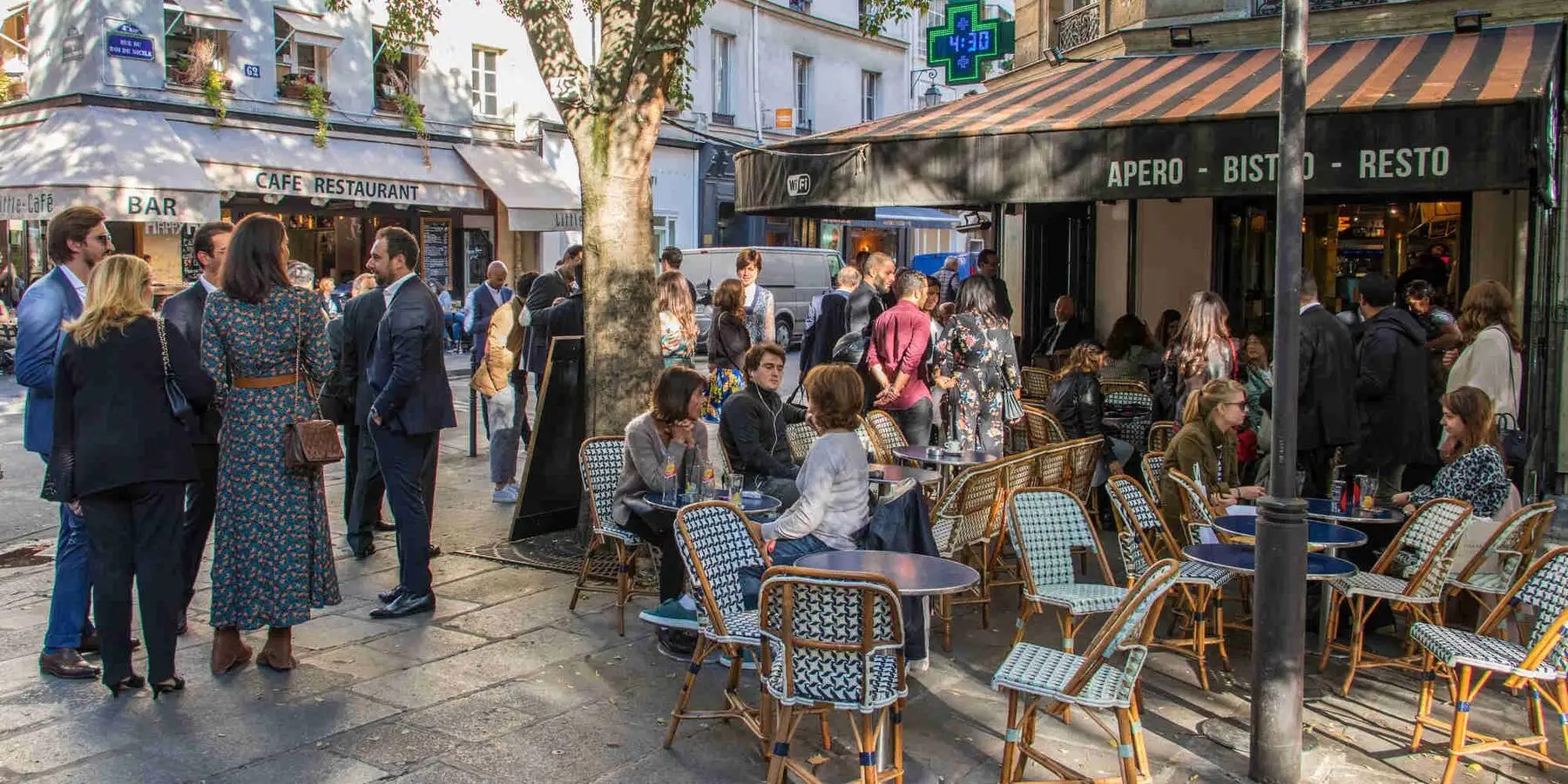
Photograph: Studio TTG, Paris je t'aime
Paris rewards the repeat visit more honestly than the first. The first visit is spent proving the city exists: the tower, the great museums, the boulevards at speed. The return visit is slower and better. The known streets are taken at the hours when they belong to the people who live on them, the same small hotel on the Left Bank does the work of a home address, and sightseeing gives way to a rhythm that can be kept for decades.
Begin on the Left Bank, in Saint-Germain-des-Prés, before nine. Paris je t'aime, the city's official tourism office, describes the district as village-like, a mix of culture and heritage in the centre of Paris, and early in the day that description holds. At its heart stands the Église Saint-Germain-des-Prés, at 3 place Saint-Germain-des-Prés in the 6th arrondissement. The tourism office dates the abbey from 543 and calls it the oldest in Paris; its nave remains one of the last vestiges of Norman art in the city.
The morning walk writes itself from there. On the boulevard, Les Deux Magots and the Café de Flore were the meeting places of the Paris literary and artistic world of the 20th century, and their terraces still set the tempo of the quarter. A short detour leads to the place de Fürstenberg, once a courtyard of the old abbey, where the Musée Eugène Delacroix occupies the painter's former apartments and studio at 6 rue de Fürstenberg. Beyond it lies the Jardin du Luxembourg, the gardens of the palace that houses the Sénat.
Cross the Seine in the afternoon and the city changes register. The Marais, on the Right Bank across the 3rd and 4th arrondissements, was marshland before it was anything else, drained through the work of religious orders, and it became an aristocratic quarter in the late Middle Ages. Its private mansions reached their peak in the 17th century, and because so much of that fabric survived, the Marais still reads as a city within the city.
After six, the Marais is at its best. The centre of the evening is the place des Vosges, one of the oldest squares in Paris, its 36 red-brick houses and arcades set around a green space in the 4th arrondissement. At number 6, the Maison de Victor Hugo preserves the apartment where the writer lived from 1832 until 1848, and admission to its permanent collections is free. The square asks for no itinerary: walk the arcades, sit on the grass while the light lasts, and let dinner be late.
The discipline that keeps Paris fresh is the third element: one new quartier, learned properly, on each visit. Not a dash across town, but a single unfamiliar district given a full day, entered through one anchor. In the Marais itself, the Musée Carnavalet, the museum of the history of Paris at 23 rue de Sévigné, and the Musée national Picasso-Paris at 5 rue de Thorigny, with more than 5,000 works, each repay that treatment.
Saint-Germain before nine
Start at the Église Saint-Germain-des-Prés, 3 place Saint-Germain-des-Prés, Paris 6th, the abbey church dating from 543 and described by the tourism office as the oldest in Paris.
Then coffee on the boulevard: Café de Flore at 172 boulevard Saint-Germain, or Les Deux Magots at 6 place Saint-Germain-des-Prés, the literary addresses of the quarter.
The Marais after six
Make for the place des Vosges as the day ends: 36 red-brick houses, arcades all round, and a green space at the centre, in Paris 4th.
Call first at the Maison de Victor Hugo, 6 place des Vosges, where Hugo lived from 1832 until 1848. Admission to the permanent collections is free.
One new quartier
Choose one district per visit and give it a day, with a single museum as the anchor.
Good anchors include the Musée Carnavalet at 23 rue de Sévigné, Paris 3rd, whose permanent collections are free, and the Musée national Picasso-Paris at 5 rue de Thorigny, Paris 3rd.
A note on returning. The repeat visit works because so little of it is new. The same Left Bank hotel, the same morning streets, the same square at the same hour, and one deliberate unknown each time: that proportion, kept over years, turns Paris from a destination into a habit of mind.
Continue in Places
Gstaad after the lifts close, Monaco before the harbour wakes, and the other places the Maison returns to.
More places