Provence, the Luberon
Stone villages, lavender by late June, and the markets at Apt and Lourmarin taken early. The Luberon is best read as a calendar, and October is the month to return.
Notes from Elsewhere · Published November 2026 · Updated November 2026
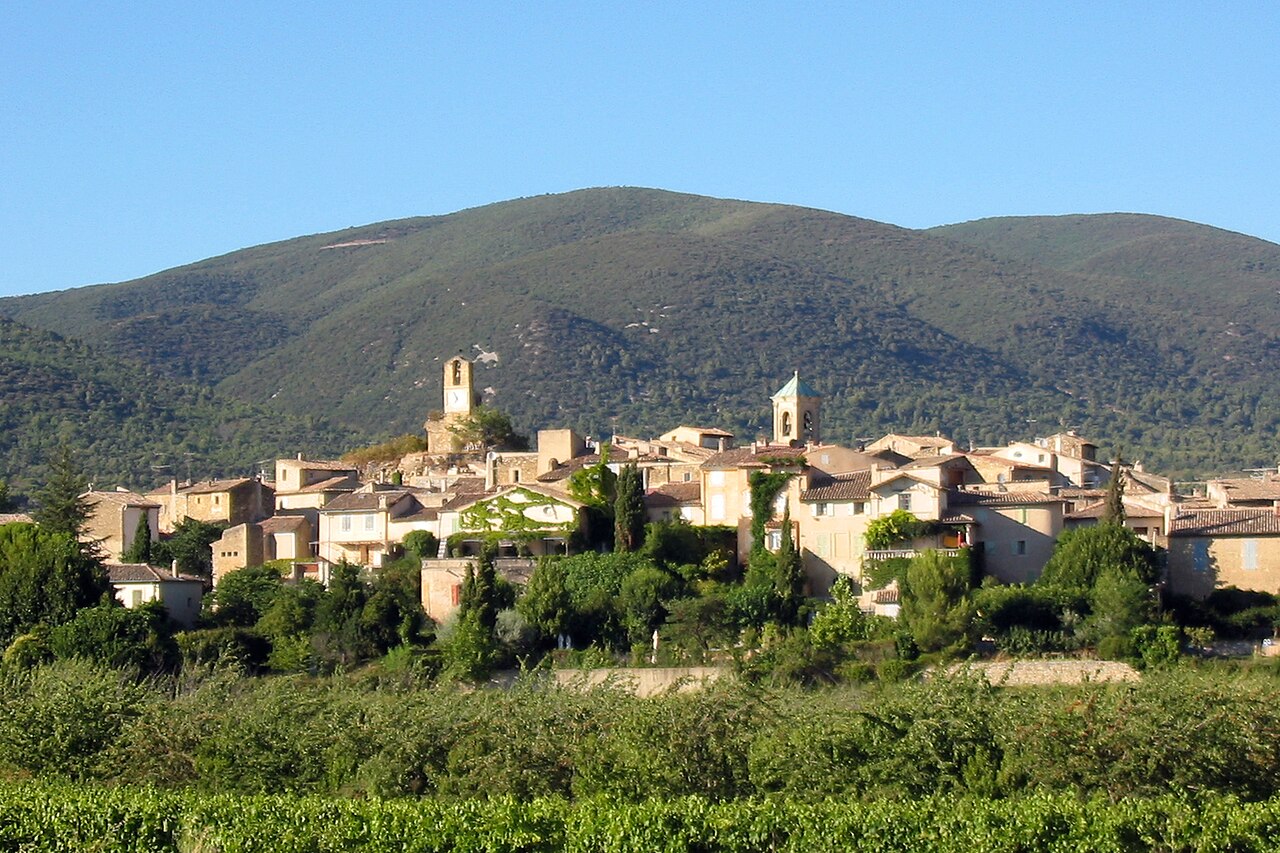
Photograph: Arjenw, via Wikimedia Commons
The Luberon is a massif before it is a destination. Its ridge runs for 75 kilometres from west to east, between Cavaillon and Forcalquier, and rises to 1,125 metres at the Mourre Nègre. Around it, the Parc naturel régional du Luberon, created on 31 January 1977, covers 185,000 hectares across 77 municipalities in the Vaucluse and the Alpes-de-Haute-Provence. It is a protected landscape that is also a lived-in one, and that double character explains its appeal.
The villages are the first pleasure. Hilltop and lowland villages alike are built in the dry stone architecture the park describes as emblematic of the region: bories, terraces and walls, houses gathered at the foot of a castle or inside ramparts, a pattern reflecting the need for protection felt in the early twelfth century. Five villages in the park are classed among the Most Beautiful Villages of France: Ansouis, Gordes, Lourmarin, Ménerbes and Roussillon. Each keeps its own register, from the ochre cliffs at Roussillon to the pale stone of Gordes.
Geography gives the villages their order. The Combe de Lourmarin cuts through the ridge and connects the northern part of the territory to the south, separating the Petit Luberon to the west from the Grand Luberon to the east. Lourmarin, in the photograph above, stands below the massif among vineyards and orchards, arranged around its towers and its market. Cross the combe and the light and the planting change with the slope.
Come first in late June. Destination Luberon puts it plainly: in June and July the lavender is in flower and the markets are in full swing. At the Abbaye Notre-Dame de Sénanque, founded in 1148, the abbey is surrounded in summer by lavender fields, one of the most composed sights in Provence. Lavender distillation and honey belong naturally to the agriculture of the park, alongside its cherries and its wine.
Then organise the week around the markets, and take them early. At Apt, the market has been held every Saturday since the twelfth century. It begins at the Bouquerie and occupies the whole old town, and at the height of the season more than 300 exhibitors take part; in 1996 it was designated one of the 100 most beautiful markets in France. At Lourmarin the market is on Friday morning. Between the two, the stalls carry the territory itself: the candied fruits of Apt, goat cheeses, herbes de Provence, tapenade and olive oils from local mills.
Return in October. Destination Luberon describes an autumn of fine colours, the season of truffles and mushrooms, after the heat and the full markets of summer have passed. The villages are their own again then: the stone, the squares and the market mornings belong once more to the people who live with them all year. A place that rewards two visits in two different seasons is rarer than one that rewards a single visit, and the Luberon is generous in both.
The villages
Gordes and Roussillon. Gordes in pale stone, classed among the Most Beautiful Villages of France; Roussillon against its ochre cliffs.
Lourmarin. South of the combe that bears its name, among vineyards and orchards, and classed on the same list.
The markets
Apt, Saturday morning. Held since the twelfth century, across the whole old town. Arrive early, before the lanes fill.
Lourmarin, Friday morning. The second anchor of the week. Buy the goat cheese, the tapenade and the olive oil where they are made.
October
The return month. Autumn colour on the massif, truffles and mushrooms in season, and the markets back to their local rhythm.
Plan two visits: late June for the lavender, October for the villages themselves.
A note on the park. The Luberon park is also recognised by UNESCO, as a biosphere reserve and a global geopark, across its 77 municipalities. The villages, the lavender and the markets are not preserved behind glass. They are kept in use, which is why they remain worth travelling for.
More places, taken slowly
Gstaad after the lifts close, the Amalfi Coast by boat, and other places the Maison returns to.
Back to Places