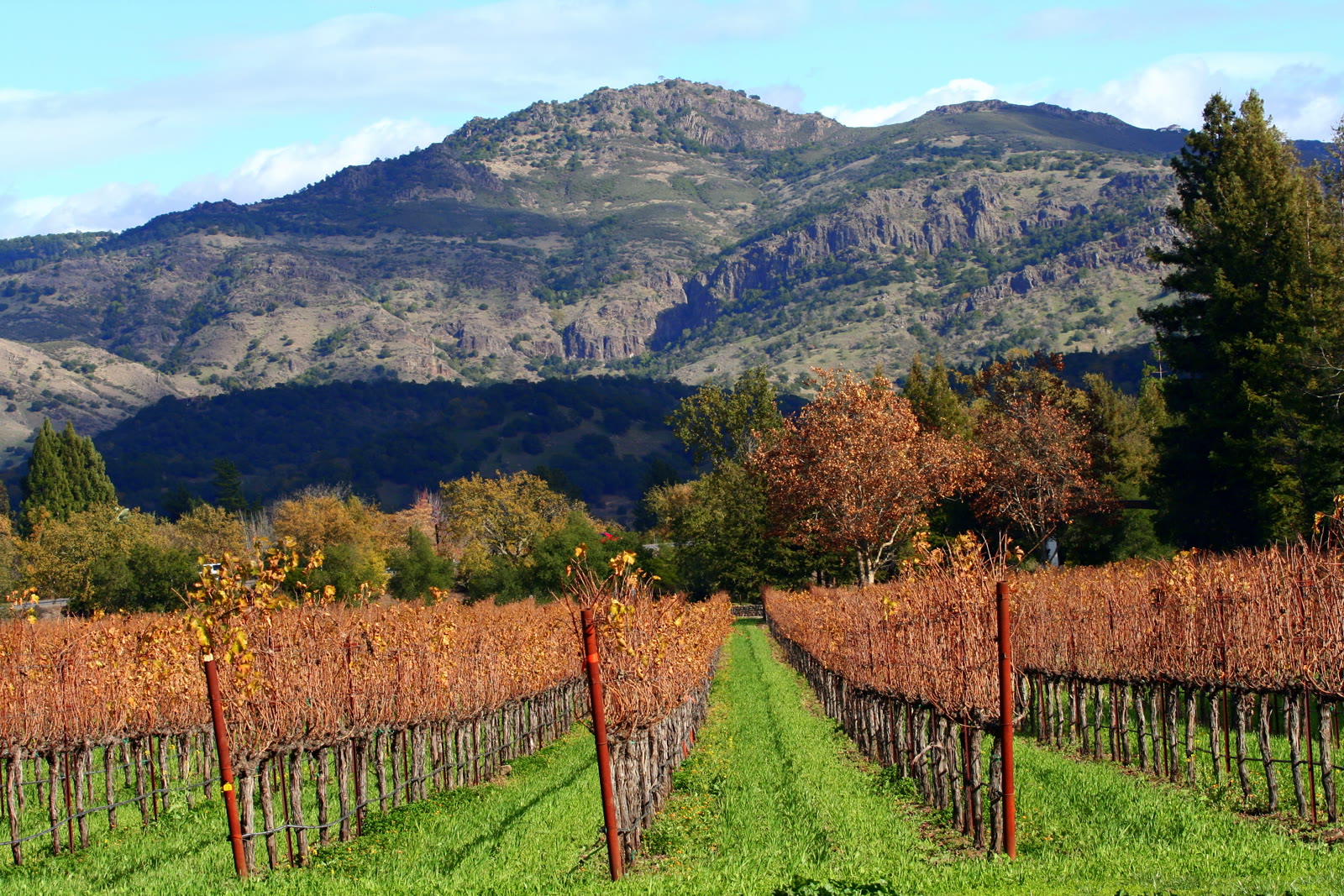
Napa Valley, at the second seating
Small rooms, old vines and 30 miles of valley floor: a wine country that rewards the unhurried, and the later dinner booking.
Notes from Elsewhere · Published November 2026 · Updated November 2026
Photograph: John Morgan, via Wikimedia Commons
Napa Valley is small, and its smallness is the first kindness it does a visitor. The valley floor is just 30 miles long and five miles across at its widest point, which makes it, as Visit Napa Valley notes, one of the smallest of the well-known wine regions. Everything is close. The vines run from the edge of one town to the edge of the next, and a day can be planned on a single page.
Within that small compass sits a remarkable variety. The Napa Valley AVA was designated in 1981, California’s first recognised AVA and the second in the United States, and inside it the Napa Valley Vintners now count 17 nested AVAs, each with its own soil, climate and terrain, at elevations from sea level to 2,600 feet. Cabernet Sauvignon is the principal variety across much of the valley, while cooler Los Carneros, moderated by San Pablo Bay, is planted principally to Chardonnay, Merlot and Pinot Noir. The climate is Mediterranean, the southern end much cooler than the northern.
The vines are old in spirit if not always in fact. George Calvert Yount was the first to plant Napa Valley grapes, in 1839, and Charles Krug established the valley’s first commercial winery in 1861. In 1968 the valley created America’s first agricultural preserve, declaring agriculture the highest and best use of its land. Then, in 1976, came the Paris Tasting: a blind, comparative tasting that set California Cabernet Sauvignon and Chardonnay against the best wines of Bordeaux and Burgundy, and gave top honours to a Chateau Montelena Chardonnay and a Stag’s Leap Wine Cellars Cabernet Sauvignon. Wineries have since grown from a few dozen to several hundred, but the preserve has kept the valley a farm first.
The towns run in a single, legible line from north to south: Calistoga, St. Helena, Rutherford and Oakville, Yountville, the city of Napa, and American Canyon. Visit Napa Valley counts nearly 150 places to stay, among them hotels, resorts, country inns and bed and breakfasts. Choose a small room in one town and let it be the base: one town known properly is worth more than all of them driven through in a day.
The table is the valley’s second crop. Visit Napa Valley counts more than 125 restaurants, and the cooking follows the farming, seasonal and close to the ground it grew in. Book the second seating. The later table is calmer, the room settled, the kitchen cooking for people who have finished hurrying. Keep the day in proportion, too: Visit Napa Valley recommends two or three winery visits in a day, no more, as most experiences take a minimum of 90 minutes. In harvest season, that leaves room for the valley at its best, a harvest dinner in the rows, where the crush ends at one long table.
Only about 9 percent of Napa County, some 45,000 acres, is planted to grapes, and the valley produces just 4 percent of California’s wine. Those proportions explain the place. This is a small, protected, intensively farmed valley that has chosen quality and continuity over scale, and it asks the same of its visitors: fewer appointments, longer lunches, and dinner taken late, when the room is quiet.
The valley floor
Thirty miles long and five miles at its widest, holding 17 nested appellations inside the Napa Valley AVA of 1981.
The ground changes constantly: elevations from sea level to 2,600 feet, and a soil profile of 100 variations across 33 series.
The towns
One line, north to south: Calistoga, St. Helena, Rutherford and Oakville, Yountville, Napa and American Canyon.
Base in one town, in a small room. The next town is always closer than it looks on an itinerary.
The table
More than 125 restaurants serve a valley of this size. The sensible order of the day is two or three winery visits, then dinner.
Book the second seating: the valley’s natural hour, unhurried and generous.
A note on pace. Napa Valley has protected its farmland since 1968 and kept its proportions deliberately small. The courtesy it extends is slowness. Return it in kind.
Continue in Places
Gstaad after the lifts close, and Bordeaux taken one estate a day.
Back to Places